Sister Simplice
Les MisérablesSister Simplice is a nun who watches over the seriously ill Fantine. Though the novel gives little account of her life beyond this work, she matters as both caregiver and witness: at Fantine’s bedside, she sees Jean Valjean return, helps sustain Fantine’s hope, and later recounts a moment of tenderness whose meaning the narrative leaves open.
Identity and Work
Sister Simplice is in the infirmary when dawn begins to break. Fantine has spent the night feverish and sleepless, and Sister Simplice has kept watch over her. She leaves Fantine sleeping to prepare another dose of quinine, attending to the medicines and bottles in the laboratory. Her introduction is quiet and practical: she is presented through the work of nursing, amid the ordinary tasks surrounding a gravely ill woman.
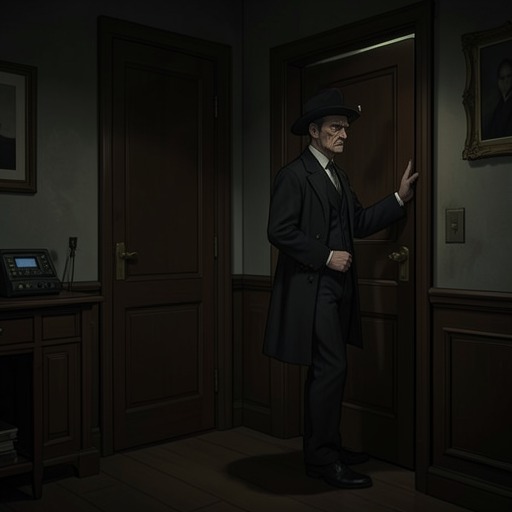
When Jean Valjean enters without making a sound, Sister Simplice turns and recognizes him as the mayor. He asks after Fantine, and she explains that the woman had been dangerously ill the previous day but is now better. Her care includes more than tending to Fantine’s body; she understands that Fantine’s renewed hope depends on believing that the mayor has gone to Montfermeil to bring back her child, Cosette.
Sustaining Fantine’s Hope
Sister Simplice does not question Jean Valjean about where he has been. From his expression, she understands that he has not come from Montfermeil, but she does not tell Fantine that her child has not been brought to her. Jean Valjean agrees that she was right not to disabuse Fantine. Their exchange establishes a small, consequential act of care: Sister Simplice protects a hope that is giving Fantine comfort, even as the adults around her confront the discrepancy between that hope and what has happened.
The scene leaves unanswered what Sister Simplice and Jean Valjean will say when Fantine wakes and sees that Cosette is not with them. It does not show Sister Simplice resolving that dilemma. Instead, her understanding of Fantine’s condition is conveyed through her restraint and her attention to what the sick woman believes. She is a witness to the fragile interval in which Fantine’s hope remains intact.
The Last Visit to Fantine
Later, after Fantine has died, Sister Simplice is the only witness to Jean Valjean’s private words at her bedside. The narrator stresses that no one else on earth heard what he said and does not claim to know whether the dead woman heard him. Sister Simplice’s account is narrower and more concrete: she often recounted that, as Jean Valjean spoke into Fantine’s ear, she distinctly saw an ineffable smile appear on Fantine’s pale lips and in her vacant eyes.
Jean Valjean then arranges Fantine’s head on the pillow as a mother might arrange a child’s, fastens her shirt, tucks her hair beneath her cap, and closes her eyes. Sister Simplice’s witnessing gives this scene its human testimony, but not a definitive explanation. The smile may be read as a bodily change observed by a bereaved witness or as a sign of consolation; the narration holds open the possibility that what seems like a touching illusion might also be a sublime reality.
Narrative and Religious Significance
Sister Simplice’s importance lies in the limits of what she can know and the care with which she bears witness. She cannot restore Cosette to Fantine or undo Fantine’s suffering. She can watch over the sick woman, refrain from destroying her hope at a vulnerable moment, and later preserve the account of a final expression that might otherwise have gone unseen.
The wider novel presents Jean Valjean’s life as a movement toward the salvation of a soul, shaped by mercy, moral change, and Providence. Its religious imagery includes Fantine appearing in Cosette’s dreams as an angel and the angelic presence imagined as awaiting Jean Valjean at his death. Sister Simplice does not explain or certify that spiritual pattern. At Fantine’s bedside, her remembered observation supplies something more intimate: a human witness to a moment in which tenderness and the possibility of consolation meet.